


ARP Bin Rentals
How to Dispose of Appliances in Lambton County
Old appliances can’t go out with regular garbage in Lambton County. They’re classified as regulated waste and must be:
- taken to an approved recycling facility,
- scheduled for municipal bulk pickup (where available),
- returned through a retailer take-back program, or
- disposed of using a permitted bin rental service.
Improper curb placement can result in rejected loads, additional fees, or environmental fines, as most appliances contain refrigerants, oils, metals, or electrical components that require proper handling.
Your Options for Getting Rid of Them
Here’s how Lambton County homeowners typically handle appliance disposal, and how each option stacks up:
| Option | Best For | Downsides | Notes |
|---|---|---|---|
| Recycling centre/scrap metal facility | One-off appliances you can transport yourself | You handle the hauling; refrigerant removal may cost extra | Call ahead to confirm acceptance and any prep requirements. |
| Retailer take-back | Replacing a single appliance with a new one | Usually limited to like-for-like swaps; fees may apply | Ask about haul-away at checkout or delivery scheduling. |
| Municipal bulk pickup | Items in a municipality that offers the service | Limited availability, strict prep rules, and sometimes long wait times | Check your city’s schedule and set-out rules. |
| Bin rental | Renovations, cleanouts, or multiple appliances at once | Requires upfront confirmation on what's allowed in the bin | Confirm appliances/fridges are permitted before booking. |
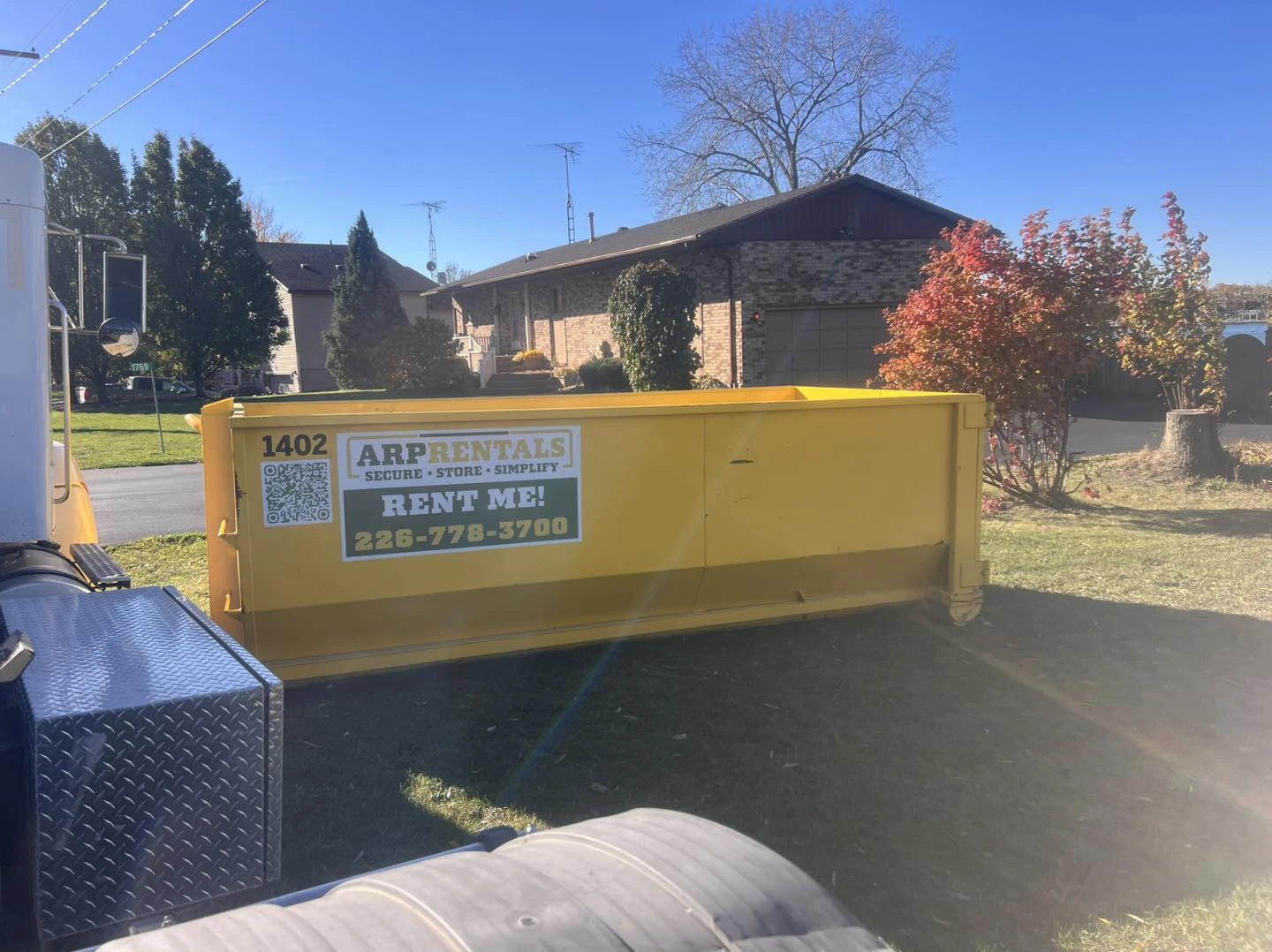
For most multi-appliance situations, renovations, estate cleanouts, and rental property turnovers, ARP bin rental is the most effective and convenient solution. One container, one pickup, and the provider handles transport to an approved facility.
What Actually Counts as an Appliance?
An appliance is any large household unit that runs on electricity, gas, or refrigerants. These aren’t your toasters or kettles; those are classified as small electronics and follow different rules.
We’re talking about large home appliances:
- Refrigerators and freezers
- Stoves, ovens, and cooktops
- Dishwashers
- Washing machines and dryers
- Water heaters
- Air conditioners and dehumidifiers
Because these items are bulky and often contain regulated materials, they can’t go through standard waste collection.
The Rules: Ontario and Lambton County
The rules for appliance recycling and disposal vary by province and by local jurisdiction.
Provincially
Appliances are banned from regular household garbage across Ontario to prevent hazardous waste from entering landfills. Anything containing refrigerants, oils, or pressurized systems must be processed at an approved facility.
Illegal dumping, even on your own property, can come with serious fines. Individuals may face fines of up to $10,000 or more upon conviction, depending on the offence. Homeowners remain legally responsible for proper disposal, whether transporting the appliance themselves or hiring a service.
Locally
Municipalities within Lambton County handle things differently. Some offer bulk item pickup; others require you to bring appliances to a recycling centre yourself.
Local bylaws may also dictate where items can be placed for pickup, how long they can remain at the curb, and any required preparation (e.g., removing doors or draining fluids).
Appliances That Need Extra Attention
Not all household appliances can be tossed in a bin the same way. These items have specific handling requirements under Ontario environmental law:
Fridges and Freezers
Freezers and fridges contain refrigerants (such as Freon) that must be professionally removed before disposal to avoid hazardous waste. Show up at most facilities with the refrigerant still inside, and they’ll turn you away.
AC Units & Dehumidifiers
ACs have the same refrigerant and oil issues as fridges. They need to use approved recycling programs or facilities designed to handle those materials to avoid ending up in a landfill.
Water Heaters
Water heaters hold residual water and sediment. Drain them thoroughly and disconnect them before transport, as a full water heater is heavy, leaky, and a safety hazard.
Gas Appliances
Items such as stoves and dryers must be properly disconnected before you move them. An improper disconnection is both a safety risk and a potential bylaw violation.
Commercial or Oversized Units
These items are often not accepted by standard facilities. These usually need advance approval or a custom disposal arrangement. If you’re handling appliance disposal for a business, job site, or large property cleanup, review our guide to commercial bin rentals in Sarnia before booking so you can plan for bin size, approval requirements, and pickup logistics.
What Can Actually Go in a Rental Bin?
Not everything is automatically accepted. Here’s the breakdown:
Usually Fine
- Stoves and ovens
- Washers and dryers
- Dishwashers
- Metal-framed appliances with no refrigerants
Needs Special Approval
- Refrigerators and freezers
- Air conditioners and dehumidifiers
- Anything with liquids, oils, or pressurized systems
A bin full of undeclared or prohibited items can get rejected or hit you with extra charges. A quick call before you load up helps avoid the hassle.
How to Prep Your Appliances Before Disposal
A little prep work makes the whole process faster and cheaper, especially when coordinating appliance pickup.
Before you move or load anything:
- Disconnect everything: power, gas, water, all of it. Water-holding appliances (dishwashers, washing machines) must be fully drained. Water heaters should be emptied to reduce weight and prevent spills.
- Pull the doors off fridges and freezers, especially if the unit will sit unattended before pickup. It’s a simple safety measure that protects kids and pets.
- Spread the weight evenly in the bin and keep everything below the fill line. An overloaded or lopsided bin can delay pickup or become unsafe to haul.
- If the bin is going on your driveway, ask the provider about protective mats to prevent damage while you haul away your appliances.
Why Bin Rentals Are Usually the Easiest Path
If you’re dealing with multiple appliances, bin rental is the simplest option by a wide margin. If you are comparing disposal options, this guide to bin rental vs. junk removal explains when each service makes the most sense for appliance removal projects. You skip the back-and-forth of scheduling multiple drop-offs or waiting on municipal pickup windows. Everything goes in one place, and the provider handles delivery to an approved facility.
A removal service is beneficial for:
- Home renovations and remodels
- Estate and garage cleanouts
- Rental property turnovers
- Contractor-led projects
Less hauling, fewer trips, and one less thing to worry about when it comes to staying compliant with Ontario and Lambton County rules.
Dispose of Appliances the Right Way in Lambton County
Appliance disposal in Lambton County isn’t complicated. It just requires a little planning. Separate big and small appliances, identify which items require special handling, understand your municipality’s regulations on hazardous materials, and choose a disposal option that fits the job size.
If you’re unsure what appliance is permitted, or you’re managing appliance removal as part of a larger project, a quick conversation with a local disposal provider upfront can help you avoid costly mistakes down the line.